 |
| Place of Origin: | China |
| Brand Name: | MT |
| Certification: | CE |
| Model Number: | MT800-1200 |
| Minimum Order Quantity: | 1 |
|---|---|
| Price: | 2300 |
| Payment Terms: | L/C, D/A, T/T, D/P |
| Color: | White, Grey Or As Request | Blade Material: | Cr12MOV |
|---|---|---|---|
| Pressing Roller: | Steel Roller Or Rubber Roller |
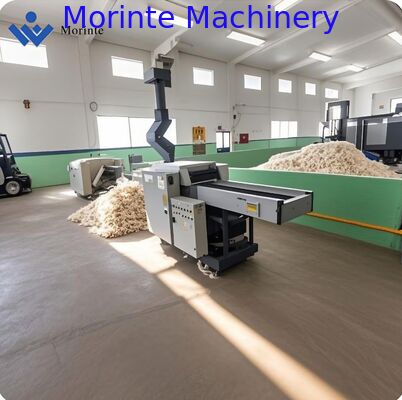
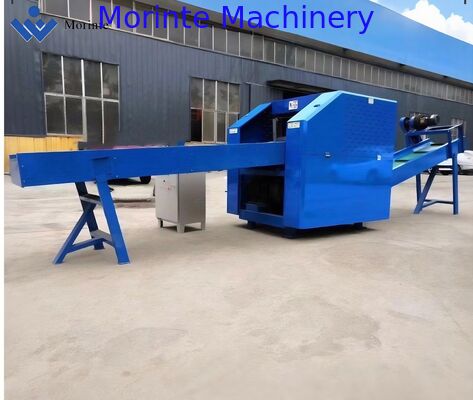
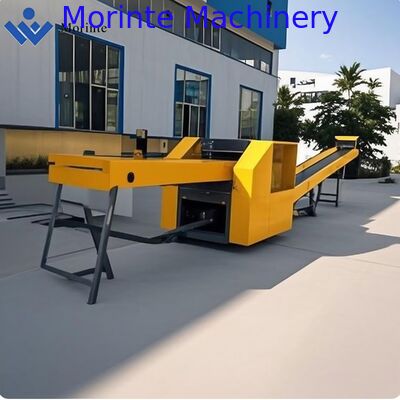
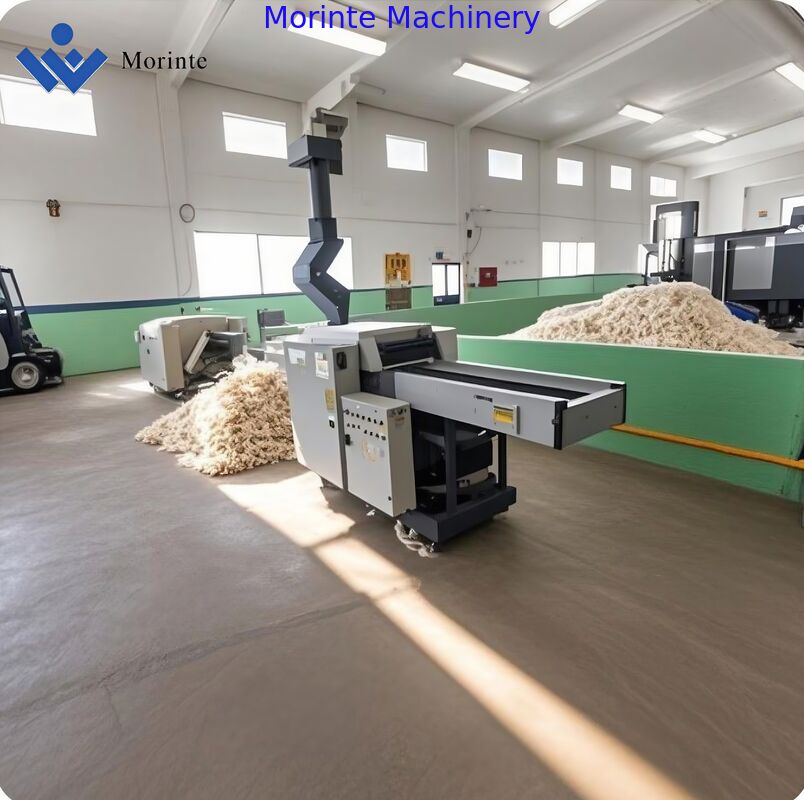
Rag cutting machine
Rag cutting machine is specifically designed for cutting and volume reduction of waste soft materials. It is widely used in waste recycling pretreatment across industries such as textiles, leather, plastics, and paper. The machine adopts a rotating blade + fixed blade shearing structure, which can quickly cut irregular, bulky, and loose soft waste materials into uniform small pieces, facilitating subsequent baling, transportation, or further processing.
The working principle of a rag cutting machine, simply put, is to use a high-speed rotating blade disc combined with a fixed blade to continuously and quickly shear materials, much like a pair of scissors. This process can be broken down into three core steps:
1. Material Feeding and Pressing
Materials (such as fabric scraps, waste yarn, etc.) are fed into the machine via a conveyor belt or manually. Before reaching the cutting edge, the material passes through one or more sets of press rollers, which flatten and compress the bulky material, ensuring it enters the cutting area smoothly and preventing entanglement.
2. Core Shearing Action
This is the most critical step. The machine primarily uses the following two methods to achieve shearing:
Rotary (Twist) Cutter Type: This is the most common and efficient method. A high-speed rotating cutter roller is equipped with multiple skewed rotating blades, which work in close shearing coordination with a fixed blade mounted on the machine. As the material passes through, the rotating blades and the fixed blade continuously cut it.
Straight (Reciprocating) Cutter Type: This method resembles a guillotine, consisting of upper and lower blades. Driven hydraulically or mechanically, the moving blade reciprocates up and down, engaging with the fixed blade to cut the material. Its structure is simple, but its efficiency and continuity are generally lower than those of the rotary cutter type.
3. Discharge and Collection
The cut material passes through a screen or falls directly into the discharge opening, where it is collected uniformly by a conveyor belt or collection bin, completing the entire cutting process.

Any industry that generates a large amount of fluffy, irregular, soft waste that is difficult to pack or transport directly has potential demand for fabric scrap cutters.
| Industry | Specific Needs |
| Textile & Apparel | Garment factories generate large amounts of fabric scraps, strips, and waste yarn daily. A cutting machine reduces these materials into smaller pieces for easy baling, sale, opening into recycled fiber, or direct use as industrial wipes or filling material. |
| Leather Products | Offcuts from shoes, bags, and leather garment factories can be cut and used for producing recycled leather, composite filling materials, or as a fuel substitute. |
| Plastic Recycling | Recovered soft plastics such as woven bags, FIBC (ton) bags, and agricultural film are bulky and irregular in shape. Cutting and volume reduction are necessary before they can enter a pelletizing line or undergo further cleaning. |
| Paper Industry | Waste paper edges, cardboard scraps, and molded pulp waste generated by paper mills are easier to return to the pulping process or transport after being cut. |
| Scrap Yards / Sorting Centers | Mixed soft wastes (fabric, paper, film, etc.) need uniform cutting and volume reduction to lower transportation and storage costs and improve baling efficiency. |
| Industry | Specific Needs |
| Automotive Interior Recycling | Soft materials from end-of-life vehicles, such as seat fabrics, headliner non-wovens, and soundproofing cotton, need to be cut and separated for categorized recycling. |
| Furniture / Mattress Manufacturing | Sponge offcuts and coir waste generated during production can be cut into smaller pieces for use as low-grade filling material or fuel. |
| Agriculture & Horticulture | Waste agricultural film, shade nets, hemp ropes, coir, etc., can be cut for easier composting or incineration. |
| Healthcare (Waste Treatment) | Certain non-infectious medical soft wastes (e.g., disposable non-woven bed sheets, isolation gowns) are cut and rendered unrecognizable before entering incineration or specialized treatment processes. |