 |
| Place of Origin: | China |
| Brand Name: | MT |
| Certification: | CE |
| Model Number: | MT600-400-250 |
| Minimum Order Quantity: | 1 |
|---|---|
| Price: | 17000 |
| Delivery Time: | 30day |
| Payment Terms: | L/C, D/P, T/T |
| Machine Width: | 1000, 1500mm | Color: | White, Grey Or As Request |
|---|---|---|---|
| Delivery Time: | 15-30 Days | Roller Material: | Casting Iron Or Tube |
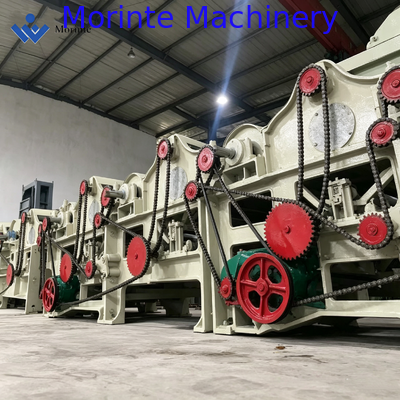
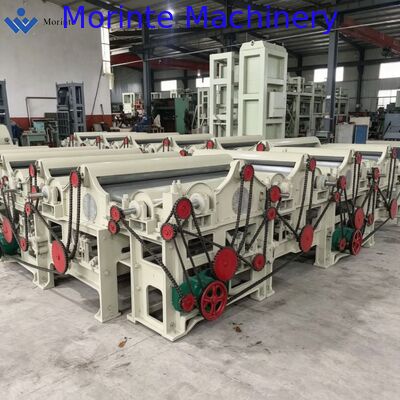
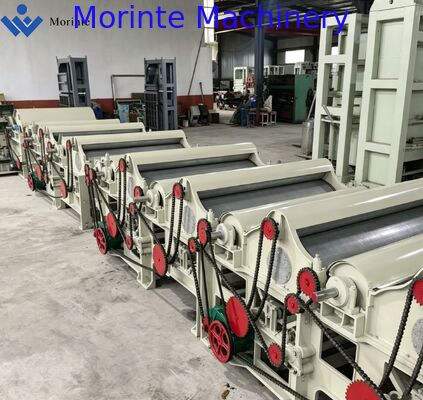
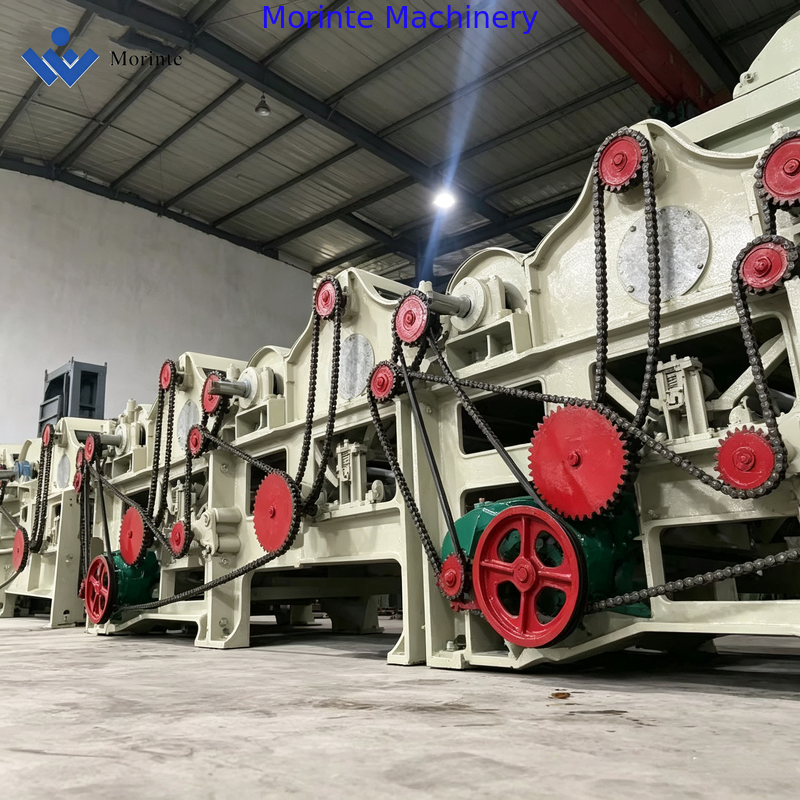
Textile waste opening machine
textile waste recycling production line is a specialized, automated, and resource-regenerating complete equipment system designed for various types of textile waste, including textile production trimmings, discarded garments, waste yarn, waste synthetic fabrics, and blended textile waste. This production line is compatible with a full range of textile waste materials, including cotton, linen, polyester, nylon, acrylic, and blended fabrics. It is suitable for diverse applications such as textile processing plants, waste textile recycling enterprises, recycled fiber production bases, and industrial solid waste treatment facilities.

| Model NO. | MT600-400-250 | Delivery Time | 15-30 Days |
| Service | OEM/ODM | Color | ANY COLOR |
| Roller Dia. | 600-400-250mm |
Machine Width | 1000mm 1300mm 1500mm |
| Power | 96.5kw | Wire | 9210, 5610 |
| Transport Package |
Stadard Exporting Package |
Specification | Set |
| Trademark | Morinte |
Origin | Shandong, China |
| HS Code | 84451900 | Production Capacity | 50 Sets/Month |
| Manufacturing Technology |
Laser Cutting Technology | Capacity | 200-300kg/H |
| Electrical Components | According to the customer's requiremen |
Spare Parts | Wire and Cylinder |
| Voltage | 380V, Customized | After-sales Service | Onsite, Video Support |
textile waste recycling production line is not just a simple solid waste treatment device; it is a core profit-generating production line that helps textile and recycling processing enterprises reduce costs, increase revenue, stabilize production, ensure environmental compliance, and improve quality.
Generate revenue and reduce raw material costs:Traditional textile enterprises generate large quantities of trimmings, waste yarn, and defective fabrics, which are mostly disposed of at low prices or sent to landfills at a cost. This not only generates no revenue but also incurs solid waste treatment expenses. After equipping with a complete textile waste recycling production line, all types of textile waste—including cotton, linen, polyester, and blended fabrics—can be 100% recycled on-site. Enterprises can directly reuse the recycled materials in their own production to replace some virgin raw materials, significantly reducing raw material procurement costs. Alternatively, they can sell the recycled fiber or filling materials externally, creating a new revenue stream. This truly turns "waste into profit."
Fine impurity removal, stable product quality, and enhanced product premium:The textile waste recycling production line features a three-stage precision impurity removal system consisting of magnetic separation for iron removal, air classification, and a metal hawk-eye detector and remover. Unlike ordinary, basic recycling equipment, this system comprehensively removes various impurities found in the waste, such as iron filings, stainless steel, copper-aluminum alloys, plastic debris, and dust. It thoroughly solves the common problems associated with traditional recycled fibers, including excessive impurities, high contamination levels, hard spots, easy yarn breakage, and poor appearance.
Intelligent equipment protection, reduced downtime due to failures: and significantly lower operation and maintenance costs:The textile waste recycling production line features multiple intelligent impurity removal and protection systems at the front end, providing continuous online screening and automatic removal of various hard foreign objects. This protects the core processing equipment downstream from the source, significantly reducing equipment wear, the probability of failures, and maintenance costs. Meanwhile, the entire line is equipped with a PLC intelligent control system for automated, continuous operation, eliminating the need for extensive manual supervision. This not only saves labor costs but also ensures stable, 24 hours, with consistent output and high efficiency, eliminating the problem of frequent downtime and work interruptions.
Wide adaptability and flexible customization to meet the production needs of various enterprises:The textile waste recycling production line can be flexibly configured as a small economic line or a large-scale production line based on the enterprise's waste output, material types, and end-use applications. It is suitable for various scenarios, including textile processing plants, waste textile recycling facilities, and recycled fiber production enterprises. The line is compatible with dry/wet waste, pure-spun and blended fabrics, as well as new and old textile materials, solving the problem of processing all types of textile waste with a single machine. With strong versatility, high cost-effectiveness, and a short payback period, this production line is an essential piece of equipment for the textile industry to improve quality, increase efficiency, and achieve a green transformation.
The application of textile waste recycling machines spans the entire chain, from production waste to post-consumer garments and then back to new products, making them a key link in enabling a circular economy for the textile industry.
This is currently the most technologically mature and widely applied direction. It mainly processes by-products, waste yarn, and fabric scraps generated during textile and garment manufacturing. These wastes have a relatively single composition and high cleanliness, offering great recycling value. The recovered fibers can basically be directly reused in production
| Scenario | Waste Source | Recycling Machine Function | Final Product |
| In-Plant Textile Mill Recycling | Waste cotton and broken yarn from the spinning process | On-site recycling, immediate opening and impurity removal | Remixed with new cotton for spinning, reducing raw material costs |
| Garment Factory Scraps | Cotton fabric scraps from T-shirt cutting | Centralized collection, fiberization | Made into automotive soundproofing cotton or industrial wipers |
| Used Clothing Recycling Plant | Discarded jeans and old sweaters from households | Removal of buttons and zippers, then fiberization | Made into recycled yarn, or directly used as filling material (e.g., cushion core) |
| Non woven Fabric Mill | Textile waste purchased from other factories | Specialized processing into fiber | Continuous production of geo textiles |
1. We have our own factory in China with experienced workers, a professional R&D team, and a responsible management team, ensuring continuous innovation of our production lines.
2. Our team attends global exhibitions regularly to keep our products at the industry forefront.
3. We have many overseas end users with long-term cooperation, and our lines are continuously optimized based on their feedback.
4. We provide a complete set of matching machines, customized according to customer needs.
1. Q:What's the minimum order quantity?
A:We can start with just 1 machine. We focus on finding the right fit for you
2. Q:What are your payment terms?
A:Standard terms are 30% deposit, 70% balance before shipment. We also accept Letters of Credit (L/C).
3. Q:How long is the delivery time?
A:For standard models, about 30-45 days. Custom machines may take a bit longer.
4. Q:What documents do you provide for customs?
A:Everything needed: Commercial Invoice, Packing List, Bill of Lading, Certificate of Origin, etc. We're experienced with export requirements.
5. Q:Can I see my machine before it ships?
A:Yes! We will send you testing photos and videos for your approval.